




02 กันยายน 2569
ผู้ชม 76 ผู้ชม
Flow Battery Test Cell | Thesix Tech
 Description
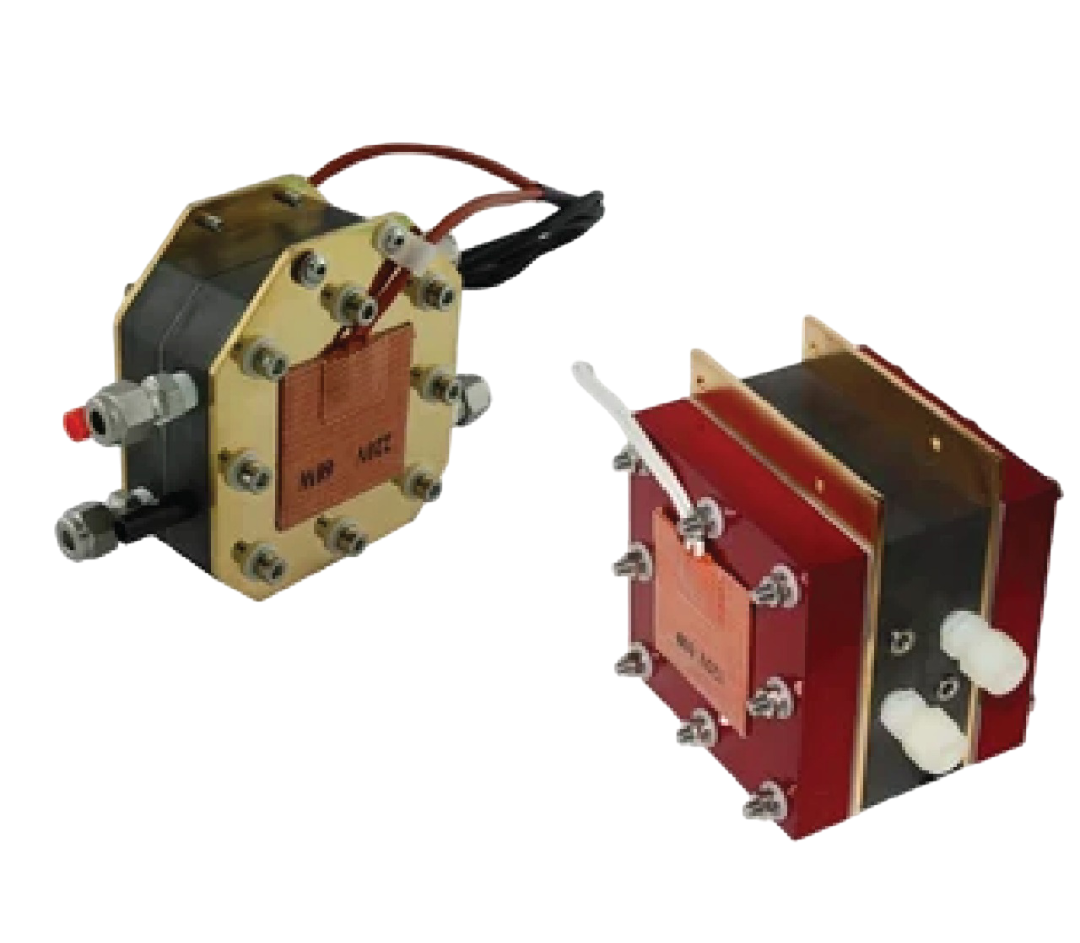
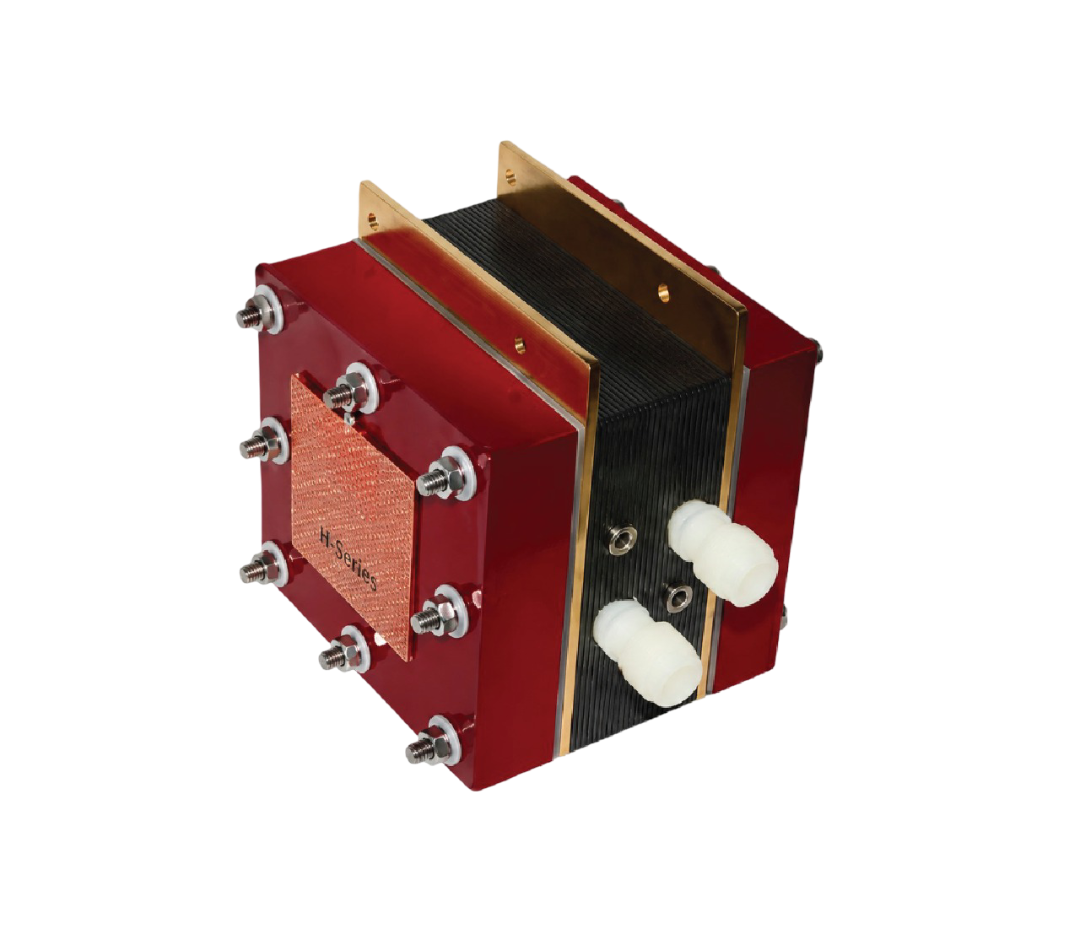
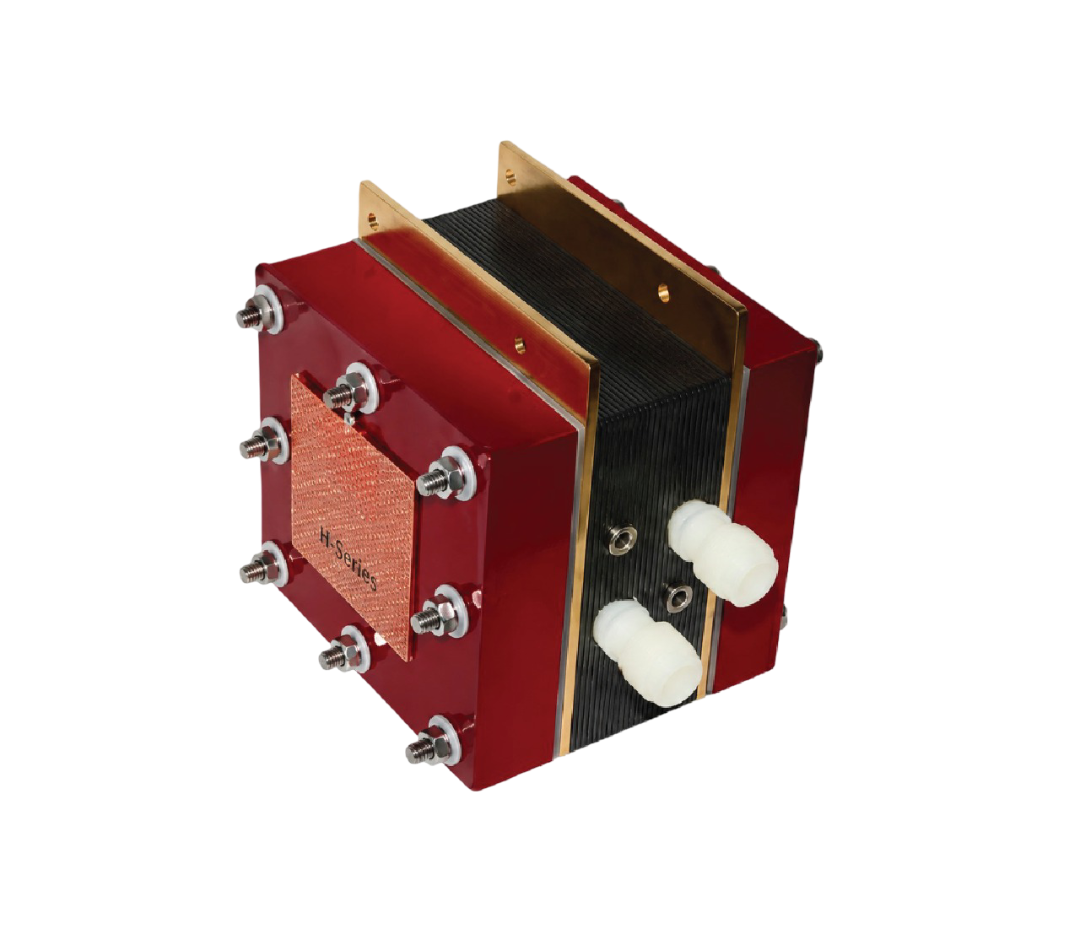
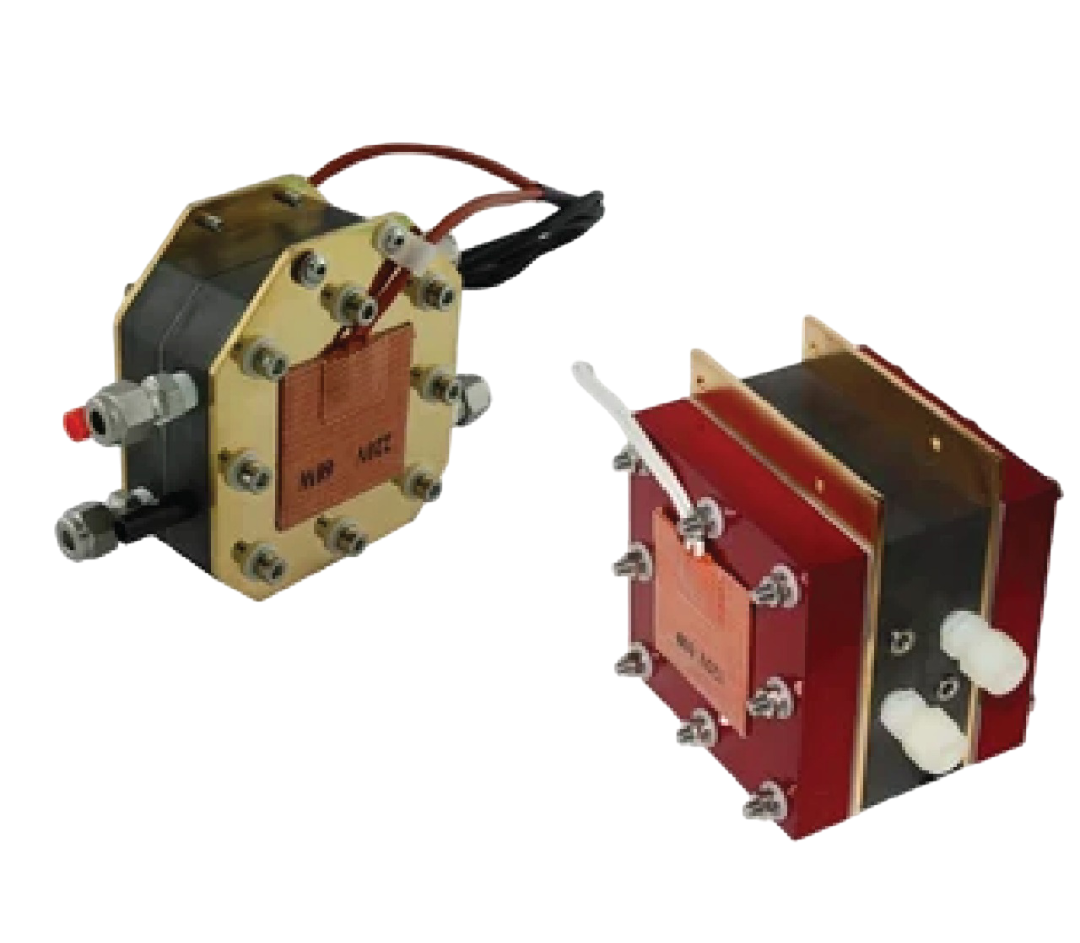
Flow batteries turns the chemical ingredients fed into electricity. The fuel is kept usually in an electrolyte outside of the battery. As a matter of fact, flow batteries act as energy storage systems and they do not self-discharge or have memory effect like conventional batteries. As the electrolyte is a corrosive acid, design should focus on prevention of leakage and corrosion that may happen at connections.A well-designed flow battery test cell allows for keeping uniform compression and sealing at low pressure; also manifolds need to be isolated from metal components to avoid corrosion.
Characteristics
|
|
|
|
|
|
|
|
|
 Description
Similar to standard batteries and fuel cells, Formic Acid Fuel Cell convert the chemical materials sent into the battery into electrical energy. The reformer uses a ruthenium-based catalyst to convert formic acid into hydrogen, carbon dioxide and water. The carbon dioxide can then be absorbed, to prevent it being released into the atmosphere.A specific test cell for Formic Acid Fuel Cell was introduced to solve test problems. A unique and tested cell design allows the flow battery to be sealed at low pressure and maintain uniform compression. All of the manifolds are isolated from touching metal components; thus eliminating corrosion in the path of the acidic liquid electrolyte.
Features
|
|
|
|
|
|
Flow Field Designs Available Upon Quotation
|
|
|
DescriptionFeatures
|
|
|
|
|
|
|
PEM Fuel Cell Test Fixture for MEAs | Thesix Tech
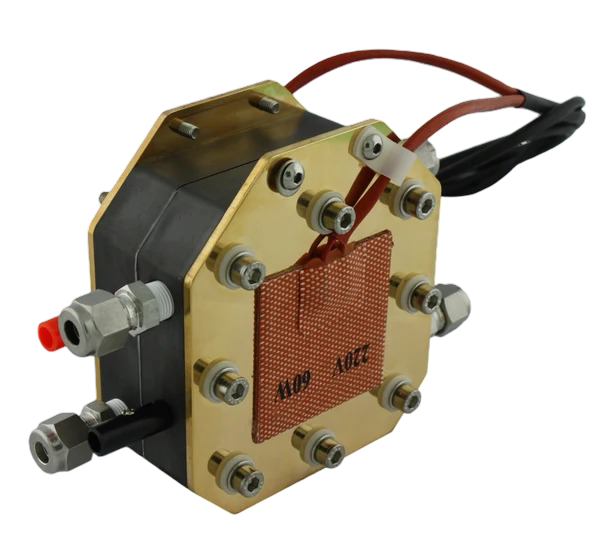
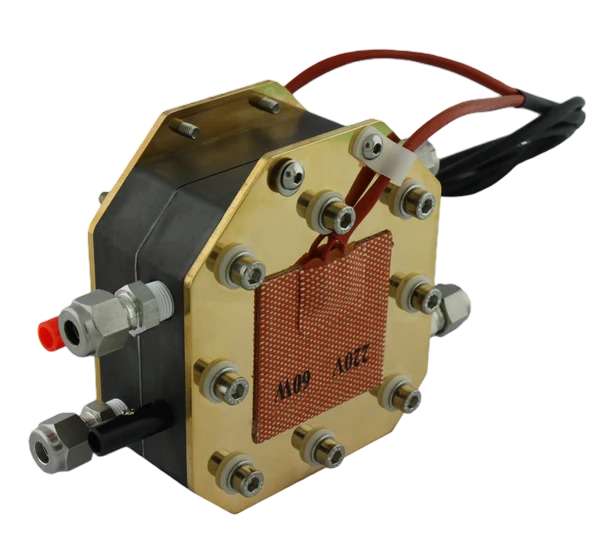
Fuel cell hardware transforms chemical ingredients (such as hydrogen, natural gas, methanol) into electricity and water with its electrochemical characteristics. The whole idea is provision of uniform temperature and gas distribution in the cell and compression of the membrane electrode assembly (MEA).Current collector is gold plated as it is a good corrosion prevention technique and good electrical conductor with graphite separator plate. A high purity graphite plate with high electrical conductivity (900 Scm-1) and high thermal conductivity (117 Wm-1K-1) is designed with gas flow channels and manifold. A Gasket is included to provide a secured seal for the MEA. Stable cell temperature is sustained with the use of power silicon rubber heaters at the ends of the fuel cell.
Characteristics
|
|
|
|
|
|
Phosphoric Acid (PAFC) Fuel Cell Hardware | Thesix Tech
DescriptionPhosphoric acid fuel cells (PAFCs) use an electrolyte composed by concentrated phosphoric acid (H3PO4) dispersed in a silicon carbide matrix. The electrodes are composed by dispersed platinum particles on a porous graphitic substrate [15]. The presence of platinum increases substantially the cost of this kind of FC and makes it CO-sensitive, impeding the use of fuel mixture with more than 1.5% of CO. PAFCs operate at temperatures around 200°C and show system electrical efficiencies around 40%A specific test cell for Phosphoric Acid Fuel Cell was introduced to solve test problems. A unique and tested cell design allows the flow battery to be sealed at low pressure and maintain uniform compression. All of the manifolds are isolated from touching metal components; thus eliminating corrosion in the path of the acidic liquid electrolyte.
Features
|
|
|
|
|
|
